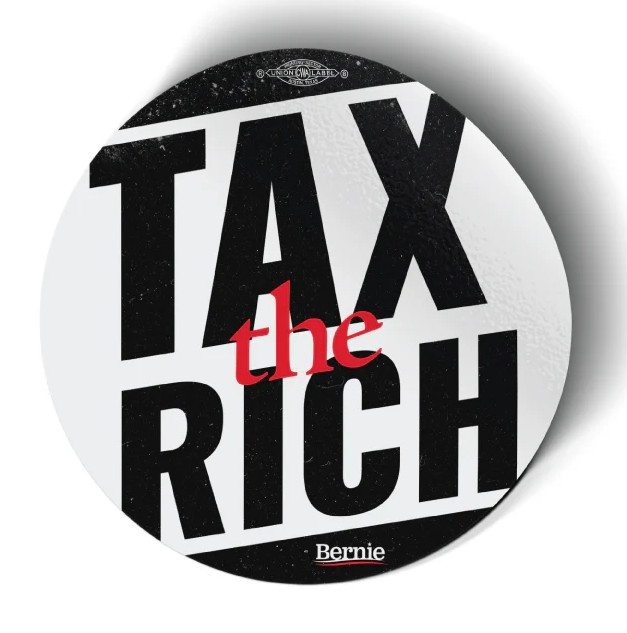
In American politics, few refrains are as predictable as the call from prominent left-wing voices, including Bernie Sanders, AOC, and others, to “tax the rich” to fund expansive social programs, housing initiatives, and equity projects. The implication is always the same: the wealthy are not paying their fair share, and more revenue extracted from billionaires and high earners will solve poverty, homelessness, and inequality.
Yet the data tells a different story. America’s tax system is already highly progressive. The rich shoulder the majority of the burden. Pouring more money into government coffers, especially in high-tax states like California, often fuels waste, fraud, corruption, and ineffective programs rather than real results.
The Facts on Who Pays What
According to recent IRS data, the top 1 percent of earners earned about one-fifth of total adjusted gross income, but paid well over one-third of all federal individual income taxes. The top 5 percent paid nearly 60 percent, and the top 10 percent shouldered more than 70 percent. By contrast, the bottom 50 percent of earners received a smaller share of income and paid only a small percentage of federal income taxes.
This is not new. The share paid by the top 1 percent has grown substantially over time, even as top marginal tax rates have changed. High earners already contribute disproportionately. Billionaires and top executives often face debates over effective rates, especially when capital gains are involved, but the broader picture shows that the system already extracts far more from high earners than from the middle or bottom.
Proposals for massive tax increases on the wealthy often ignore this baseline. They also risk capital flight, reduced investment, and slower growth, all of which can harm workers, businesses, and the broader economy.
California’s Cautionary Tale
California demonstrates the disconnect between high-tax rhetoric and real-world outcomes. The state imposes some of the highest taxes in the country, including income, sales, and gas taxes. Yet it continues to struggle with persistent homelessness, high poverty when cost of living is considered, and visible decline in several major cities.
Over recent years, California has spent tens of billions of dollars on homelessness. Reports have cited figures exceeding $24 billion over five years, yet the problem has persisted or worsened in many areas. Audits have raised serious questions about tracking, accountability, and results.
Nonprofits and nongovernmental organizations have played a major role in distributing public funds. In some cases, hundreds of millions of dollars have flowed through organizations with weak oversight, high administrative costs, questionable property deals, or limited measurable progress. Taxpayers are often told more money is needed, while the results on the ground remain deeply disappointing.
This is not an abstract issue. High taxes can fund a bureaucracy and patronage network where money flows to favored causes and intermediaries, with little improvement in core problems such as homelessness, affordability, and public safety.
Broader Government Inefficiency
Federal-level problems mirror these concerns. The United States continues running massive annual deficits, while improper payments, fraud, and waste remain major issues across large government programs. Overpayments, mismanagement, duplication, and administrative bloat all reduce the impact of taxpayer dollars.
Americans understand this instinctively. Many people believe a large share of federal spending is wasted. Programs often promise transformation, but deliver layers of bureaucracy and limited accountability. More money does not automatically mean better outcomes.
Recent efforts to review government spending, cancel wasteful contracts, investigate grants, reduce duplication, and recover improper payments have highlighted the scale of the problem. While exact savings figures are often debated, the larger issue remains clear: government spending has grown far beyond what many citizens believe is efficient, transparent, or accountable.
Accountability Over Extraction
Critics of higher taxes rightly ask: where does the additional revenue go? Too often it flows into programs plagued by high administrative costs, poor oversight, political favoritism, and failure to achieve stated goals.
Politicians may frame “tax the rich” as a moral issue, but governance requires results. A serious society should measure programs by outcomes, not intentions. Good intentions do not build housing efficiently, lower costs, reduce fraud, or lift people out of poverty.
Raising taxes further on high earners risks diminishing returns. It can reduce investment, discourage innovation, push businesses and talent to lower-tax states, and slow economic growth. It also fails to fix the root problem: government does not always spend existing revenue wisely.
A Better Path Forward
Prices fall, deficits shrink, and opportunity expands through growth, spending restraint, reduced fraud, better program design, and accountability. Endless revenue hikes cannot solve problems created by inefficient systems.
California’s trajectory should serve as a warning. Extractive policies paired with poor governance can produce business flight, unaffordable living costs, and worsening social problems, not utopia.
Voters are right to be skeptical. The “tax the rich” mantra persists because it sounds compassionate and avoids hard choices about waste. But the data shows that high earners already pay a large share of the tax burden. The real scandal is how little taxpayers often receive in return.
Genuine progress requires auditing the sprawl, enforcing results, reducing waste, and prioritizing efficiency over slogans. Anything less is just more rhetoric recycling the same expensive failures.